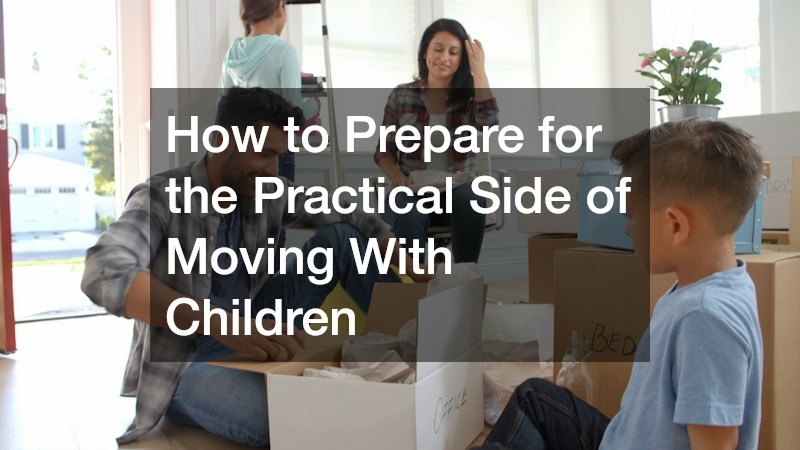

Moving with children involves more than packing boxes and changing addresses. Families also need to think about routines, schools, healthcare, childcare, activities, transportation, and the emotional adjustment that comes with leaving familiar surroundings. A practical plan can reduce last-minute decisions and help children feel more secure throughout the transition.
The process is often easier when parents separate the move into stages. Some tasks need attention weeks before moving day, while others can wait until the family is settled. Creating a timeline can help households decide when to contact movers, sort belongings, transfer records, research schools, and schedule appointments. It can also make space for children to ask questions and participate in age-appropriate ways.
Every family has different priorities, so there is no single moving checklist that works for everyone. However, planning around the needs of children can help parents make choices that support daily life before, during, and after the move. The following areas are especially useful to consider when organizing a family relocation.
Build a Moving Timeline Around Family Routines
A moving timeline should account for work schedules, school calendars, childcare needs, medical appointments, and other commitments that cannot simply be paused. Parents can begin by listing major deadlines, including lease dates, closing dates, utility changes, school enrollment periods, and travel arrangements. Once those fixed points are clear, smaller tasks can be assigned to specific weeks.
Families comparing moving options may decide that a full service moving company makes sense if they want help with packing, loading, transportation, and unloading. Others may prefer to handle some tasks themselves while hiring residential movers for the heavier parts of the process. The right choice depends on budget, distance, timing, and how much time parents realistically have available.
Children can also be included in the schedule. Younger children may help choose which toys travel with them, while older children can label boxes or create lists for their own rooms. Giving children small responsibilities can make the move feel less mysterious and help them understand what will happen next.
Parents should also avoid filling every day before the move with errands. Leaving some open time for meals, sleep, school events, and goodbyes can make the transition more manageable for everyone.
A shared calendar can keep both adults aware of appointments, packing goals, school deadlines, and moving tasks, reducing the chance that important details are overlooked.

Choose Moving Help Based on Distance and Logistics
Not every move requires the same type of moving support. A short relocation across town has different logistical needs from a move to another state. Families should consider how far they are going, how much they own, whether they need storage, and whether there are stairs, elevators, narrow streets, or parking restrictions at either property.
For nearby relocations, local movers may be able to complete the move within a day or over a short period. Parents should ask about minimum charges, travel fees, packing options, and what is included in the estimate. It is also helpful to confirm how fragile items, large furniture, and children’s belongings will be handled.
Families relocating farther away may need long distance movers with experience coordinating delivery windows and interstate transportation. Longer moves often require more detailed planning because the household may spend several days without access to most of its belongings. A separate essentials bag with clothing, medications, school materials, chargers, snacks, and favorite comfort items can help bridge that gap.
Before hiring any company, families should review contracts carefully and understand how pricing is calculated. Asking questions early can reduce misunderstandings and make it easier to compare services on more than price alone.
Parents should also confirm arrival timing with movers so someone can be available at the new home without disrupting school pickups, childcare, meals, or bedtime routines.
Sort, Donate, and Dispose of Unwanted Items
Moving is a useful opportunity to reduce clutter before paying to transport belongings that are no longer needed. Families can sort one room at a time and separate items into categories such as keep, donate, sell, recycle, and discard. Starting early allows more time to make thoughtful decisions instead of throwing everything into boxes at the last minute.
Children can participate by choosing toys, clothing, books, or sports equipment they have outgrown. Parents may find it helpful to set simple limits, such as keeping favorite items while donating duplicates or things that have not been used in a long time. This approach can reduce conflict while still helping children feel involved.
Larger cleanouts may require a dumpster rental, especially if the move involves a garage, basement, attic, shed, or home renovation. Families should check local rules about placement, permits, and prohibited materials before arranging delivery. It is also important to choose an appropriate size so the container does not create unnecessary cost or take up more space than needed.
Reducing clutter before the move can make packing faster, lower transportation volume, and simplify unpacking. It can also give children a clearer sense of what will be going with them to the new home.
Keep important documents, sentimental items, medications, and valuables out of disposal piles. Creating a separate protected area can prevent accidental losses during a busy household cleanout.

Research Schools and Childcare Before the Move
Education is often one of the biggest concerns for families moving to a new area. Parents should begin school research early enough to understand enrollment requirements, transportation options, academic calendars, and application deadlines. Gathering records in advance can also prevent delays once the family arrives.
Families exploring private education may want to compare the best private middle and high schools based on curriculum, class size, extracurricular activities, tuition, admissions requirements, and commute time. The best fit depends on the individual child, so parents should look beyond rankings and consider the environment in which their child is most likely to succeed.
Younger children may need preschool or early childhood care. A Montessori preschool can appeal to families interested in an environment that emphasizes independence, hands-on learning, and self-directed activity. Parents should visit programs when possible, ask about daily routines, and learn how teachers communicate with families.
Childcare logistics matter just as much as educational philosophy. Drop-off times, after-school coverage, transportation, and holiday schedules can affect work routines significantly. Parents who research these details before moving can avoid scrambling for care during the first few weeks in a new community.
If possible, families can tour schools before enrollment. Seeing classrooms, meeting staff, and practicing the commute can make the first day feel more predictable for children.
Plan Activities That Help Children Build Connections
A move can disrupt children’s friendships and familiar activities, so finding new ways to connect with peers can be an important part of settling in. Parents do not need to schedule every free hour, but a few structured activities can give children opportunities to meet people and develop a sense of belonging.
Sports teams, music lessons, library programs, clubs, recreation centers, and neighborhood events can all help children become familiar with their surroundings. Parents can ask schools or community organizations about activities that match existing interests so children can continue something they already enjoy.
During school breaks, a summer camp for kids can provide another way to build routines and make friends. Day camps may focus on sports, science, art, nature, or general recreation, while overnight programs offer a different level of independence. Families should review age ranges, schedules, supervision, transportation, and registration deadlines before choosing a program.
It can also help to leave room for unstructured time. Children may need quiet periods to process the move, explore the new neighborhood, or simply relax at home. Balancing social opportunities with downtime can make the adjustment feel more natural rather than overwhelming.
Parents can involve children in choosing one new activity after the move. Having something anticipated on the calendar may give them a positive point of focus.

Transfer Medical Records and Establish New Care
Healthcare planning should begin before moving day, especially for children who need regular appointments, prescriptions, or ongoing treatment. Parents can ask current providers how to transfer records and whether they can provide copies of vaccination histories, medication lists, growth charts, or specialist notes.
After arriving, families may want to establish care with a local pediatrician before an urgent need comes up. Choosing a provider in advance can make routine checkups, school forms, vaccinations, and sick visits easier to manage. Parents may want to ask about office hours, same-day appointments, after-hours guidance, hospital affiliations, and how the practice handles referrals.
Families should also identify nearby urgent care centers, pharmacies, and hospitals so they know where to go if a problem occurs outside normal office hours. Keeping insurance cards, medication information, and emergency contacts in an accessible place can be useful during the transition.
If a child takes prescription medication, parents should make sure they have enough supply to cover the period around the move. Transferring prescriptions before changing pharmacies can help prevent gaps, particularly when moving across state lines or changing insurance networks.
Families should update emergency contact information at schools and childcare programs after moving. New addresses, phone numbers, authorized pickup contacts, and provider details should remain current.
Arrange Dental Care and Other Routine Services
Dental care is another area that can be overlooked during a move because it may not feel urgent compared with housing, schools, and transportation. However, establishing routine providers early can help families avoid scrambling when a child develops tooth pain, breaks a tooth, or needs a scheduled cleaning.
Parents comparing pediatric dentists can look at location, office hours, insurance participation, preventive services, emergency policies, and the way the practice works with children who are nervous about dental visits. Families should also arrange for previous dental records and X-rays to be transferred when appropriate.
Other routine services may need similar attention. Children who wear glasses, receive therapy, or see specialists may need new providers in the area. Parents can create a simple healthcare list that includes primary care, dental care, vision care, pharmacy information, and any specialty services used regularly.
Scheduling too many appointments immediately after the move may add stress, so families can prioritize by urgency. Time-sensitive needs should come first, while routine cleanings or annual visits can often be scheduled once the household is more settled. The goal is to create continuity without making the first few weeks unnecessarily busy.
Parents can keep a folder with insurance information, provider names, appointment dates, and transferred records. Centralizing these details makes routine care easier to organize after relocation.
Help Children Adjust After the Boxes Are Unpacked
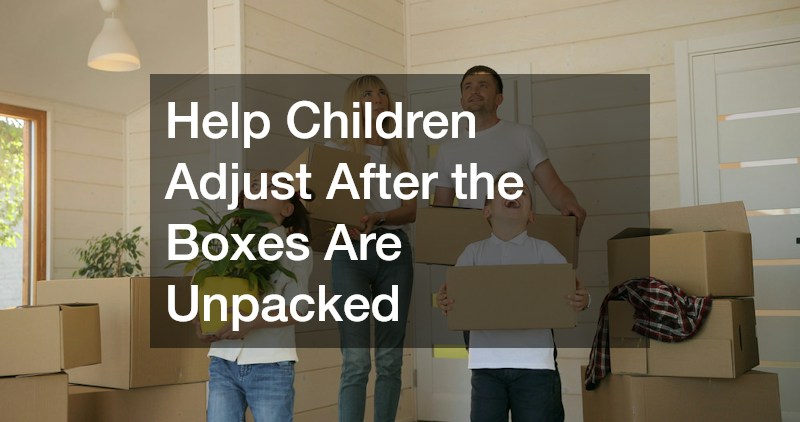
Settling in continues long after moving day. Children may seem excited at first and then become homesick once the novelty wears off. Parents can support adjustment by keeping familiar routines where possible, especially around meals, bedtime, homework, and weekend activities.
Setting up children’s bedrooms early can provide a familiar place during an otherwise unfamiliar period. Favorite blankets, books, toys, photos, and decorations can make the new home feel more recognizable. Families can also unpack shared spaces gradually instead of trying to make the entire house perfect immediately.
Exploring the new community together can help children develop a sense of familiarity. Visiting the library, playground, school route, grocery store, and nearby parks gives them landmarks they can recognize. Parents can also encourage children to stay in contact with old friends while making room for new relationships.
It is useful to check in regularly without pressuring children to feel positive about every part of the move. Some may adjust quickly, while others need more time. A practical relocation plan can reduce uncertainty, but patience and consistency are equally important once the family arrives.
Families can make the transition easier by treating moving as a process rather than a single event. Planning transportation, school, childcare, healthcare, activities, and household logistics in advance can reduce avoidable stress. When parents create structure while remaining flexible, children have a stronger foundation for becoming comfortable in their new home and community.
Parents can also invite children to help arrange common spaces. Familiar routines, family meals, and small household traditions can help the new environment gradually feel like home.